時間線總覽
Timeline overview
早期不列顛:石器、青銅與鐵器時代
Early Britain
- 最早的居民是狩獵採集者;那時不列顛與歐洲大陸有陸地相連。The first people were hunter-gatherers, when Britain was joined to the continent by a land bridge.
- 約 1 萬年前,不列顛與大陸被海水分開。Britain became separated from the continent about 10,000 years ago.
- 約 6000 年前首批農民到來,建造了房屋、墓葬和紀念建築,包括巨石陣(威爾特郡)。The first farmers arrived about 6,000 years ago and built houses, tombs and monuments, including Stonehenge in Wiltshire.
- 斯卡拉布雷(奧克尼羣島)是北歐保存最完好的史前村落。Skara Brae on Orkney is the best-preserved prehistoric village in northern Europe.
- 約 4000 年前進入青銅器時代,人們製作青銅工具,死者葬在圓形土冢(round barrows)中。About 4,000 years ago came the Bronze Age: people made bronze tools and buried their dead in round barrows.
- 鐵器時代的人建造了山堡(如多塞特郡的梅登城堡),説凱爾特語,並鑄造了不列顛最早的錢幣。In the Iron Age people built hill forts such as Maiden Castle in Dorset, spoke Celtic languages, and made the first coins minted in Britain.
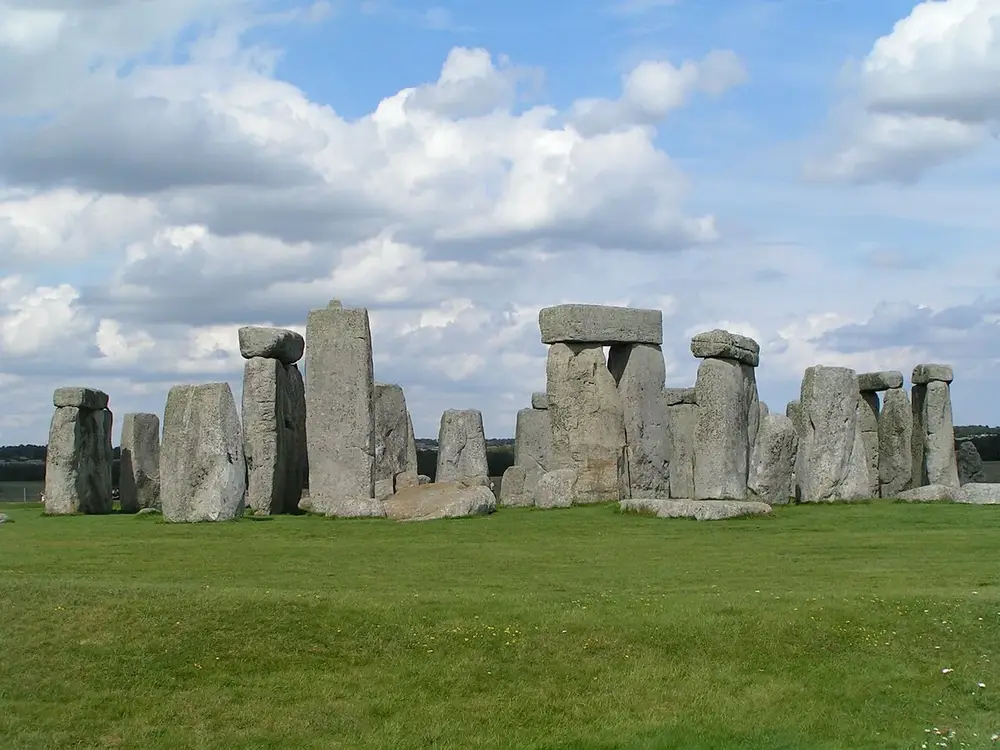
考試常問"巨石陣是誰建的"。答案不是羅馬人,也不是凱爾特人或維京人,而是石器時代的早期農耕人羣。凱爾特語言(威爾士語、蘇格蘭和愛爾蘭蓋爾語的祖先)是鐵器時代的特徵。
A favourite question is "who built Stonehenge?" Not the Romans, the Celts or the Vikings, but Stone Age farming people. Celtic languages, the ancestors of Welsh and the Gaelic languages, belong to the Iron Age.
羅馬時期(公元 43–410 年) ⭐
The Romans (AD 43–410)
- 尤利烏斯·愷撒於公元前 55 年入侵,但沒有成功征服。Julius Caesar invaded in 55 BC but did not conquer Britain.
- 公元 43 年,克勞狄烏斯皇帝領導羅馬軍隊成功入侵。In AD 43 Emperor Claudius led a successful Roman invasion.
- 布狄卡(Boudicca)是東英格蘭愛西尼部落的女王,起兵反抗羅馬;她的雕像在倫敦威斯敏斯特橋旁。Boudicca, queen of the Iceni in eastern England, led a revolt against the Romans; her statue stands by Westminster Bridge in London.
- 蘇格蘭北部未被征服;哈德良皇帝下令修建哈德良長城以守住北部邊界。The north of Scotland was never conquered. Emperor Hadrian built Hadrian's Wall to hold the northern border.
- 羅馬人統治約 400 年,修建道路、城鎮和公共建築,帶來法律、新的動植物;早期基督徒也在此時出現。The Romans stayed for about 400 years, building roads, towns and public buildings, introducing laws and new plants and animals. The first Christian communities appeared in this period.
- 羅馬軍隊於公元 410 年撤離,回去保衞羅馬。The Roman army left in AD 410 to defend other parts of the Empire.
哈德良長城的部分遺蹟至今仍在,包括豪斯斯特茲(Housesteads)和文多蘭達(Vindolanda)等要塞,是熱門的徒步和參觀地點,也是世界遺產。
Parts of Hadrian's Wall still stand, including the forts at Housesteads and Vindolanda. It is a popular walking route and a World Heritage Site.
盎格魯-撒克遜人與維京人 ⭐
Anglo-Saxons and Vikings
- 羅馬人撤離後,來自歐洲西北部的朱特人、盎格魯人和撒克遜人入侵;到約公元 600 年,英格蘭已形成多個盎格魯-撒克遜王國。After the Romans left, Jutes, Angles and Saxons from north-west Europe invaded. By about AD 600, Anglo-Saxon kingdoms covered much of England.
- 威爾士、蘇格蘭等地保持獨立,延續凱爾特文化。Wales and much of Scotland stayed free of Anglo-Saxon rule and kept their Celtic culture.
- 薩福克郡的薩頓胡發現了一位盎格魯-撒克遜國王的船葬墓。At Sutton Hoo in Suffolk, an Anglo-Saxon king was buried in a ship with treasure and armour.
- 傳教士將基督教帶到各地:聖帕特里克(愛爾蘭守護聖人)、聖科倫巴(在愛奧那島建修道院)、聖奧古斯丁(坎特伯雷首任大主教)。Missionaries spread Christianity: St Patrick (patron saint of Ireland), St Columba (founded a monastery on Iona) and St Augustine (first Archbishop of Canterbury).
- 維京人於公元 789 年首次來襲,來自丹麥和挪威。The Vikings first came in AD 789, from Denmark and Norway.
- 阿爾弗雷德大帝團結英格蘭各王國擊敗維京人;維京人定居的東部地區稱為丹麥法區(Danelaw)。Alfred the Great united the English kingdoms and defeated the Vikings; the area where Vikings settled was called the Danelaw.
- 維京人威脅促使蘇格蘭人在肯尼思·麥卡爾平統治下統一。丹麥人克努特(Cnut)後來成為英格蘭國王。The Viking threat helped unite the Scots under Kenneth MacAlpin. The Danish Cnut later became king of England.
盎格魯-撒克遜人説的古英語是現代英語的直接祖先;許多英格蘭地名也源於這一時期。維京人留下的痕跡同樣常見:以 -by 結尾的地名(如 Grimsby、Whitby)通常來自維京定居點。
The Old English spoken by the Anglo-Saxons is the direct ancestor of modern English, and many English place names date from this time. The Vikings left their mark too: place names ending in -by, such as Grimsby and Whitby, usually come from Viking settlements.
諾曼征服(1066) ⭐
The Norman Conquest (1066)
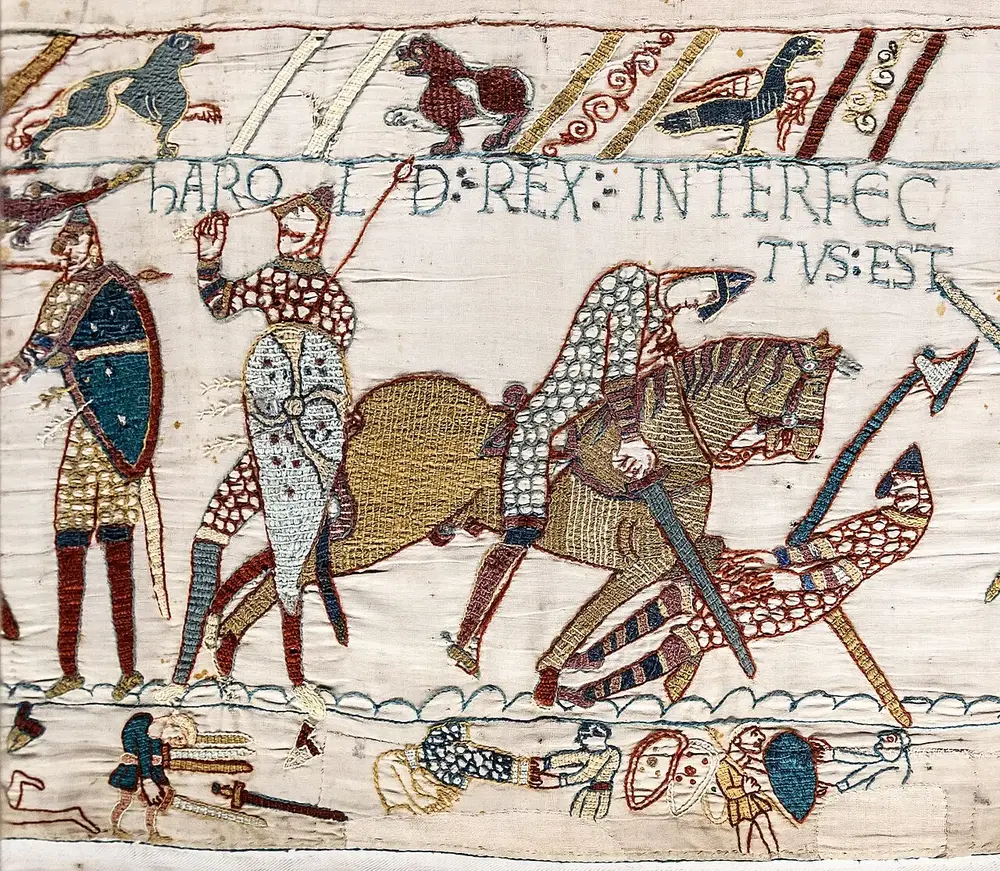
- 1066 年,諾曼底公爵威廉在黑斯廷斯戰役中擊敗英格蘭國王哈羅德(Harold),哈羅德陣亡。In 1066, William, Duke of Normandy, defeated the English king Harold at the Battle of Hastings; Harold was killed.
- 威廉成為英格蘭國王,被稱為征服者威廉。這是最後一次成功的外國入侵英格蘭。William became king and is known as William the Conqueror. It was the last successful foreign invasion of England.
- 戰役的經過被繡在貝葉掛毯上,現存於法國。The battle is shown on the Bayeux Tapestry, now in France.
- 諾曼人帶來諾曼法語,與古英語融合,深刻影響了英語。The Normans brought Norman French, which mixed with Old English and changed the language.
- 威廉下令編寫末日審判書(Domesday Book),記錄英格蘭的城鎮、村莊、人口和牲畜。William ordered the Domesday Book, a record of the towns, villages, people and animals of England.
諾曼人建立了封建制度:國王把土地分給貴族,貴族為國王提供軍隊;在土地上勞作的農奴不能隨意離開。諾曼人還入侵了威爾士,但沒有徵服蘇格蘭。
The Normans introduced the feudal system: the king gave land to lords, who supplied soldiers in return, while serfs worked the land and could not leave it. The Normans also invaded Wales but did not conquer Scotland.
中世紀(1066–1485) ⭐
The Middle Ages
- 愛德華一世征服威爾士,1284 年《魯德蘭法令》將威爾士併入英格蘭王權,並修建了康威、卡那封等城堡。Edward I conquered Wales; the Statute of Rhuddlan (1284) put Wales under the English Crown, and great castles such as Conwy and Caernarfon were built.
- 1314 年,羅伯特·布魯斯在班諾克本戰役中擊敗英格蘭,蘇格蘭保持獨立。In 1314 Robert the Bruce defeated the English at the Battle of Bannockburn, and Scotland stayed independent.
- 英法百年戰爭實際打了 116 年;1415 年亨利五世贏得阿金庫爾戰役。The Hundred Years War with France actually lasted 116 years; Henry V won the Battle of Agincourt in 1415.
- 1348 年黑死病奪去英格蘭約三分之一人口的生命。The Black Death of 1348 killed about one third of the population of England.
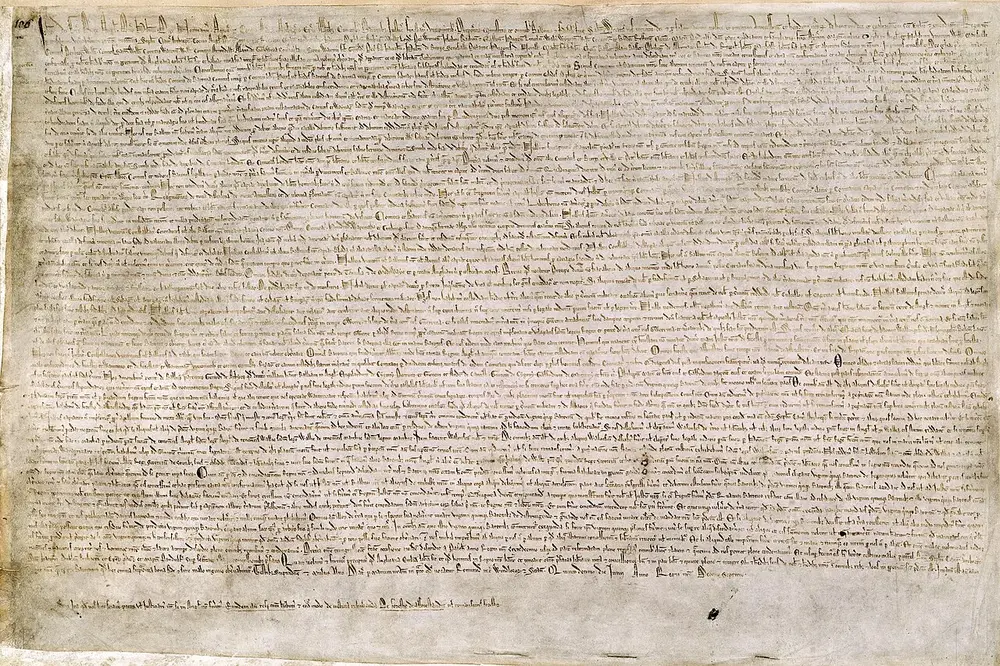
- 1215 年,約翰王被迫簽署大憲章,確立"國王也須守法"。In 1215 King John was forced to agree to Magna Carta, which established that even the king had to obey the law.
- 議會逐漸形成上議院(貴族與主教)和下議院(騎士與富裕市民);法官開始獨立於政府,形成普通法傳統。Parliament developed into the House of Lords (nobles and bishops) and the House of Commons (knights and wealthy townspeople). Judges became independent of the government, and common law developed.
- 喬叟用英語寫成《坎特伯雷故事集》;威廉·卡克斯頓是第一個在英格蘭用印刷機印書的人。Geoffrey Chaucer wrote The Canterbury Tales in English; William Caxton was the first person in England to print books on a printing press.
- 玫瑰戰爭(1455 年起):蘭開斯特家族(紅玫瑰)對約克家族(白玫瑰);1485 年博斯沃思戰役中理查三世陣亡,亨利·都鐸成為亨利七世。The Wars of the Roses (from 1455): the House of Lancaster (red rose) against the House of York (white rose). At the Battle of Bosworth Field in 1485 Richard III was killed and Henry Tudor became Henry VII.
黑死病之後勞動力短缺,倖存的農民可以要求更高的工資,舊的封建制度開始鬆動,社會流動增加。中世紀也是大教堂興建的時代,如林肯大教堂和約克大教堂,許多教堂的彩色玻璃窗講述着聖經故事。
After the Black Death there were too few workers, so surviving peasants could demand higher wages; the old feudal system began to break down. The Middle Ages were also the age of great cathedrals such as Lincoln and York Minster, whose stained-glass windows told Bible stories.
都鐸王朝(1485–1603) ⭐
The Tudors
- 亨利七世結束內戰,加強王權;其子亨利八世最為人熟知,娶過六位妻子。Henry VII ended the civil war and strengthened royal power. His son Henry VIII is best known for having six wives.
- 教皇拒絕批准亨利八世與阿拉貢的凱瑟琳離婚,亨利八世與羅馬教會決裂,成立英格蘭教會,自任領袖。When the Pope refused to let Henry VIII divorce Catherine of Aragon, Henry broke from the Church of Rome and set up the Church of England, with himself as its head.
- 亨利八世時期,《威爾士法令》將威爾士正式併入英格蘭。Under Henry VIII, the Act for the Government of Wales formally united Wales with England.
- 宗教改革:新教在英格蘭興起;愛德華六世推行新教,瑪麗一世恢復天主教("血腥瑪麗")。The Reformation spread Protestantism. Edward VI was a firm Protestant; Mary I ("Bloody Mary") restored Catholicism.
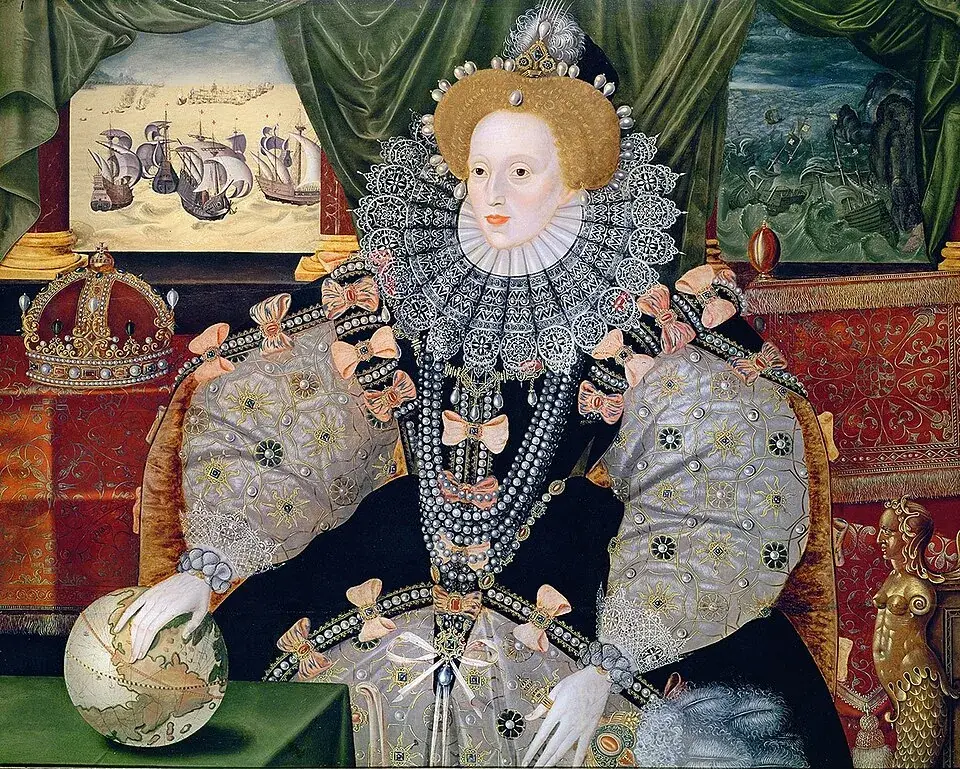
- 伊麗莎白一世(新教)在 1588 年擊敗西班牙無敵艦隊;她終身未婚,是都鐸王朝最後一位君主。Elizabeth I, a Protestant, defeated the Spanish Armada in 1588. She never married and was the last Tudor monarch.
- 弗朗西斯·德雷克駕"金鹿號"完成環球航行;威廉·莎士比亞(1564–1616)是這一時代最偉大的劇作家。Sir Francis Drake sailed around the world in the Golden Hind; William Shakespeare (1564–1616) was the greatest playwright of the age.
- 蘇格蘭女王瑪麗·斯圖亞特逃到英格蘭,被伊麗莎白一世關押約 20 年後處決。Mary, Queen of Scots fled to England, where Elizabeth I held her for about 20 years and then had her executed.
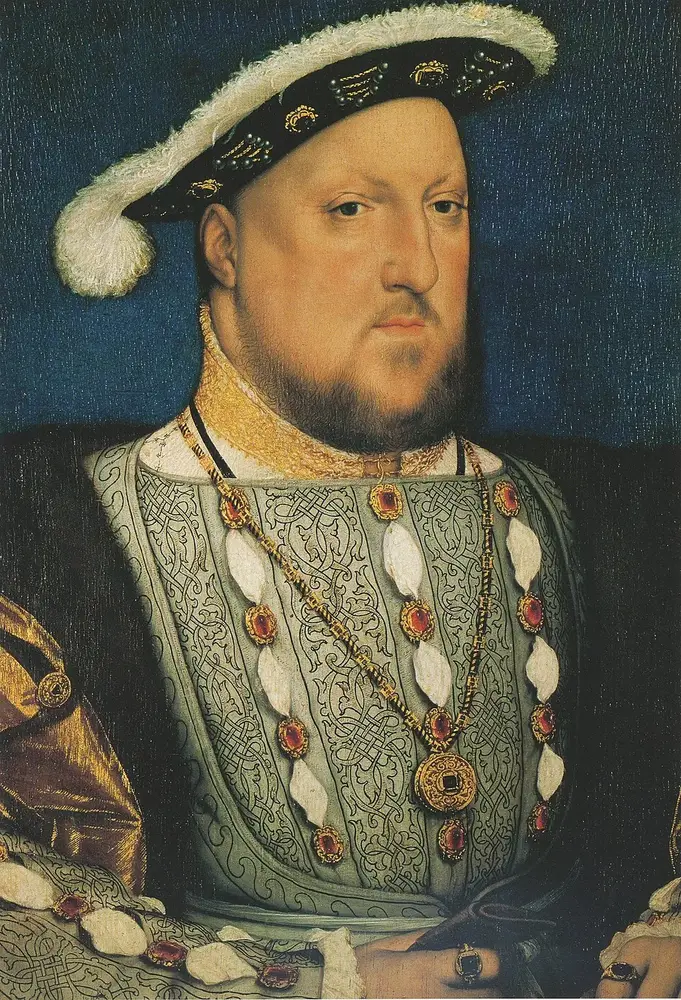
| 順序 Order | 妻子 Wife | 結局 Outcome |
|---|---|---|
| 1 | Catherine of Aragon | 離婚(瑪麗一世之母) Divorced (mother of Mary I) |
| 2 | Anne Boleyn | 被處決(伊麗莎白一世之母) Executed (mother of Elizabeth I) |
| 3 | Jane Seymour | 生下愛德華六世後去世 Died after giving birth to Edward VI |
| 4 | Anne of Cleves | 離婚 Divorced |
| 5 | Catherine Howard | 被處決 Executed |
| 6 | Catherine Parr | 比亨利活得久 Outlived Henry |
斯圖亞特王朝:內戰、共和與光榮革命 ⭐
The Stuarts, civil war and the Glorious Revolution
- 1603 年伊麗莎白一世去世,蘇格蘭國王詹姆斯六世同時成為英格蘭的詹姆斯一世("王冠聯合");他下令翻譯的欽定版聖經影響深遠。When Elizabeth I died in 1603, James VI of Scotland also became James I of England. The King James Bible he commissioned was hugely influential.
- 愛爾蘭:新教徒被安置到北部阿爾斯特等地的"種植園",埋下長期衝突的種子。In Ireland, Protestant settlers were given land in "plantations", especially in Ulster in the north, sowing the seeds of long conflict.
- 1605 年火藥陰謀:蓋伊·福克斯等人企圖炸燬議會,失敗。每年 11 月 5 日為篝火之夜。In the Gunpowder Plot of 1605, Guy Fawkes and others tried to blow up Parliament and failed; 5 November is Bonfire Night.
- 1642 年,查理一世與議會爆發內戰:保王黨(Cavaliers)對議會派(Roundheads)。In 1642 the Civil War broke out between Charles I and Parliament: the Cavaliers against the Roundheads.
- 1649 年查理一世被處決,英格蘭成為共和國(Commonwealth);奧利弗·克倫威爾後來成為"護國公"。Charles I was executed in 1649 and England became a republic, the Commonwealth. Oliver Cromwell later became Lord Protector.
- 1660 年王政復辟,查理二世即位。1665 年大瘟疫,1666 年倫敦大火,之後克里斯托弗·雷恩重建聖保羅大教堂。The monarchy was restored in 1660 under Charles II. The Great Plague came in 1665 and the Great Fire of London in 1666; Sir Christopher Wren rebuilt St Paul's Cathedral.
- 1679 年《人身保護法》(Habeas Corpus):未經法庭審理不得關押任何人。The Habeas Corpus Act 1679: no one could be held in prison unlawfully without going before a court.
- 1688 年光榮革命:信奉天主教的詹姆斯二世被推翻,奧蘭治的威廉與妻子瑪麗共同即位;1689 年《權利法案》確立議會權力,形成君主立憲制。In the Glorious Revolution of 1688, Catholic James II was replaced by William of Orange and his wife Mary. The Bill of Rights 1689 confirmed the rights of Parliament and created a constitutional monarchy.
- 1707 年《聯合法》將英格蘭(含威爾士)與蘇格蘭合併為大不列顛王國,蘇格蘭保留自己的法律和教會。The Act of Union 1707 joined England (with Wales) and Scotland into the Kingdom of Great Britain; Scotland kept its own legal system and church.
- 羅伯特·沃波爾(1721–1742)被視為英國第一位首相。Sir Robert Walpole (1721–1742) is regarded as the first Prime Minister.
- 1745 年詹姆斯黨人起義,"英俊王子查理"在 1746 年卡洛登戰役中戰敗。In the Jacobite rising of 1745, Bonnie Prince Charlie was defeated at the Battle of Culloden in 1746.
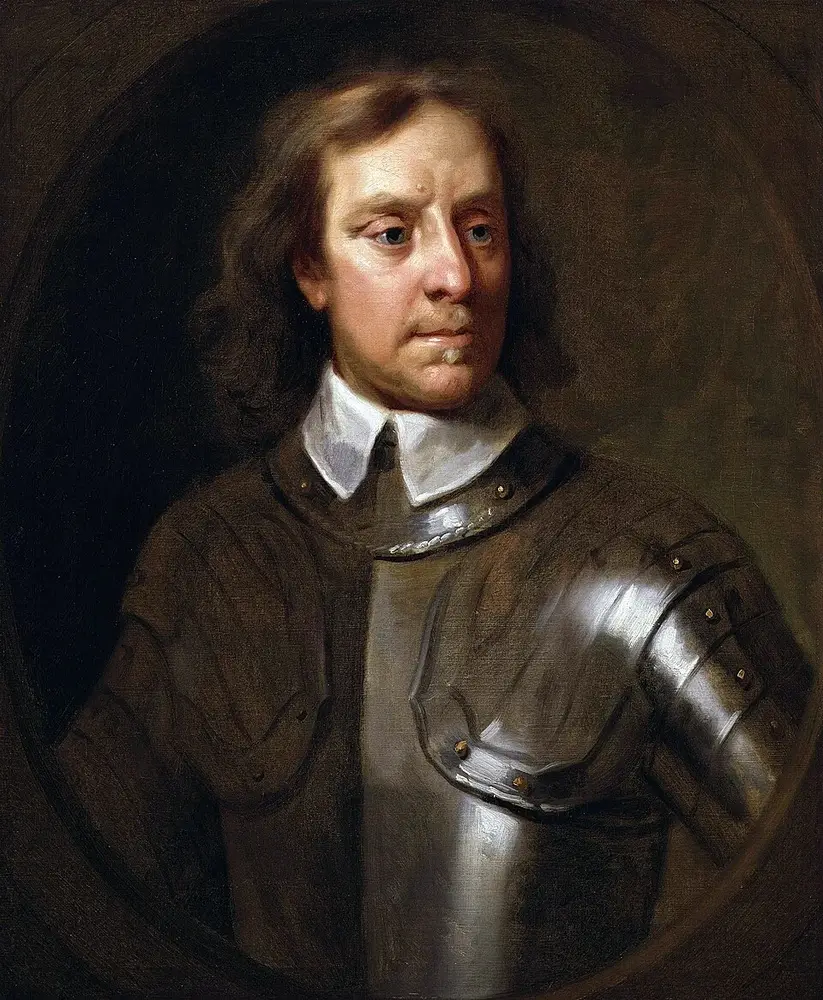
克倫威爾 1658 年去世後,他的兒子理查德無力維持局面,議會請回查理二世。復辟時期科學繁榮:皇家學會成立,艾薩克·牛頓發現萬有引力定律。
After Cromwell died in 1658 his son Richard could not hold power, and Parliament invited Charles II back. Science flourished under the Restoration: the Royal Society was founded and Isaac Newton described gravity.
光榮革命被稱為"光榮",是因為在英格蘭幾乎沒有流血;但在愛爾蘭,詹姆斯二世的支持者在 1690 年博因河戰役中被威廉擊敗。從此以後,君主必須與議會合作,議會每年召開。
The Glorious Revolution is called "glorious" because there was almost no fighting in England. In Ireland, though, William defeated James II's supporters at the Battle of the Boyne in 1690. From then on the monarch had to work with Parliament, which met every year.
啓蒙、工業革命與帝國(18–19 世紀) ⭐
Enlightenment, industry and empire
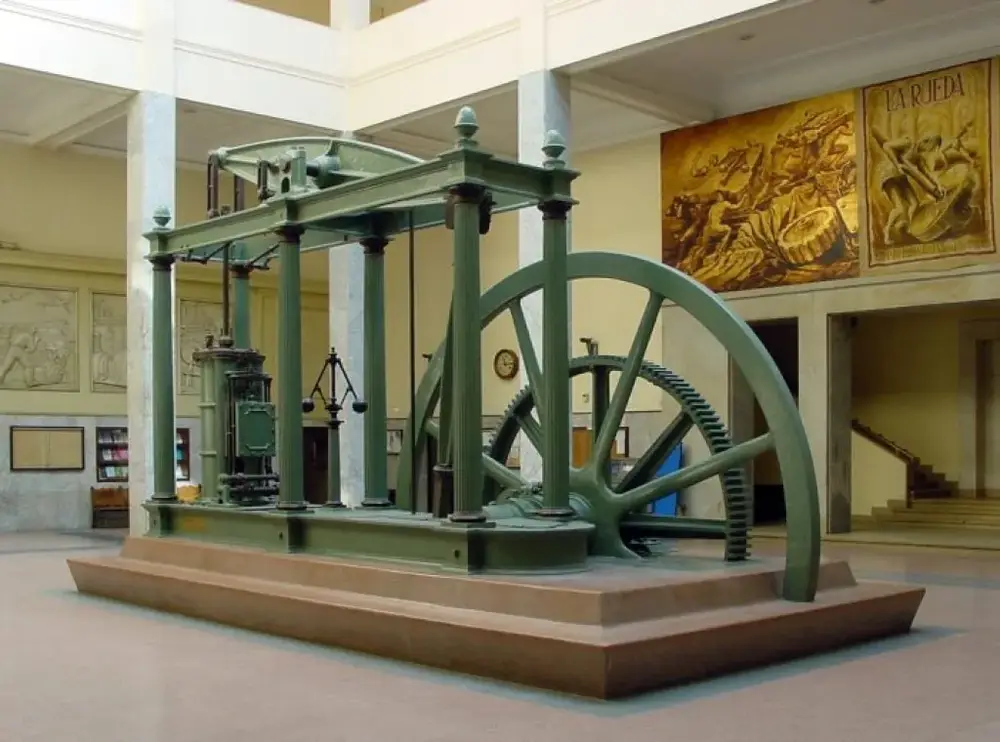
- 啓蒙運動:經濟學家亞當·斯密、哲學家大衞·休謨、發明家詹姆斯·瓦特(改進蒸汽機)都是蘇格蘭人。In the Enlightenment, economist Adam Smith, philosopher David Hume and inventor James Watt (who improved the steam engine) were all Scottish.
- 工業革命使英國成為第一個工業化國家:理查德·阿克賴特發展了紡織機械,貝塞麥鍊鋼法使鋼鐵大規模生產成為可能。The Industrial Revolution made Britain the first industrial nation. Richard Arkwright developed textile machinery, and the Bessemer process made mass production of steel possible.
- 奴隸貿易於 1807 年被廢除,大英帝國境內的奴隸制於 1833 年被廢除;威廉·威爾伯福斯是廢奴運動的領袖,貴格會是最早的反奴隸制羣體之一。The slave trade was abolished in 1807, and slavery throughout the British Empire in 1833. William Wilberforce led the campaign, and the Quakers were among the first to oppose slavery.
- 1805 年特拉法加海戰:海軍上將納爾遜擊敗法國和西班牙艦隊,陣亡;1815 年滑鐵盧戰役:威靈頓公爵擊敗拿破崙。Admiral Nelson defeated the French and Spanish fleets at the Battle of Trafalgar (1805) and died; the Duke of Wellington defeated Napoleon at Waterloo (1815).
- 1801 年愛爾蘭併入,形成大不列顛及愛爾蘭聯合王國。In 1801 Ireland was joined to create the United Kingdom of Great Britain and Ireland.
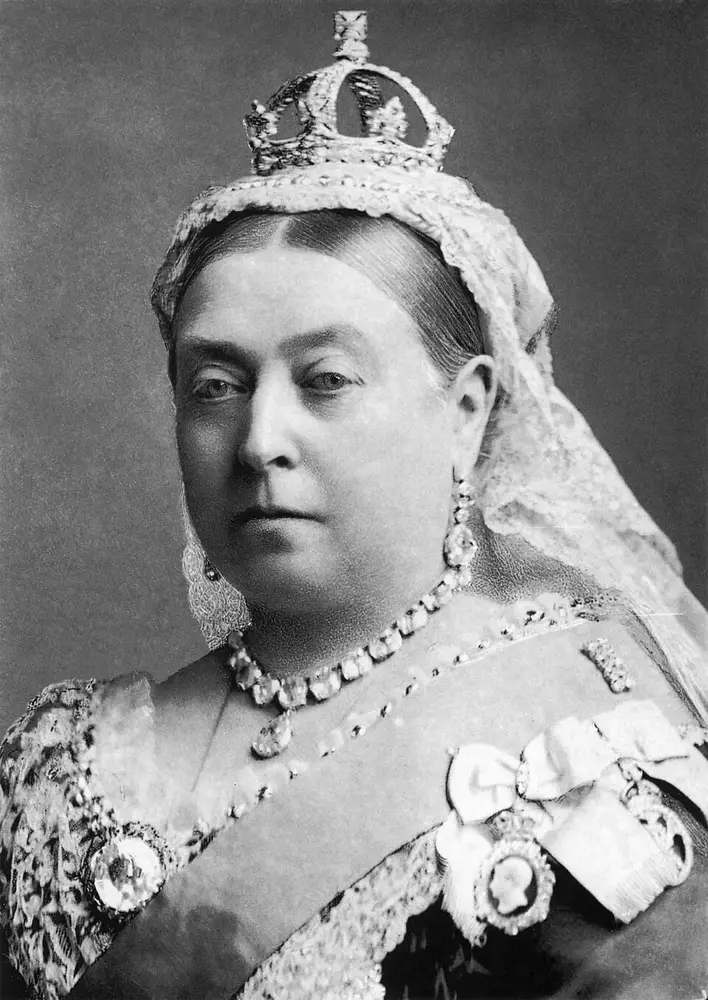
- 維多利亞女王在位 1837–1901 年,大英帝國達到鼎盛,統治全球約四分之一人口。Queen Victoria reigned from 1837 to 1901, when the British Empire reached its height, covering about a quarter of the world's population.
- 1832 年《改革法案》擴大選舉權;憲章運動爭取所有男性的投票權。The Reform Act 1832 widened the vote, and the Chartists campaigned for votes for all men.
- 弗洛倫斯·南丁格爾在克里米亞戰爭中護理傷員,被視為現代護理的奠基人。Florence Nightingale nursed soldiers in the Crimean War and is seen as the founder of modern nursing.
- 伊桑巴德·金德姆·布魯內爾設計了大西部鐵路、橋樑和輪船。Isambard Kingdom Brunel built the Great Western Railway, bridges and ships.
工業革命也帶來了惡劣的勞動條件:童工、長工時和擁擠的城市。19 世紀,議會陸續通過法律改善工廠條件;1870 年和 1882 年的法律讓已婚女性保有自己的財產和收入。
The Industrial Revolution also brought harsh working conditions: child labour, long hours and crowded cities. During the 19th century Parliament passed laws to improve factories, and laws of 1870 and 1882 allowed married women to keep their own earnings and property.
19 世紀 40 年代,愛爾蘭馬鈴薯歉收引發大饑荒,約一百萬人死亡,大批人移民英國本土和美國。
In the 1840s the potato crop failed in Ireland, causing a famine in which about a million people died and many more emigrated to Britain and the USA.
- 1807廢除奴隸貿易Slave trade abolished
- 1832《改革法案》Reform Act
- 1833廢除帝國境內奴隸制Slavery abolished in the Empire
- 1851萬國工業博覽會(水晶宮)The Great Exhibition at the Crystal Palace
- 1870/1882已婚女性財產權Married women's property rights
20 世紀:兩次世界大戰 ⭐
The 20th century: two world wars
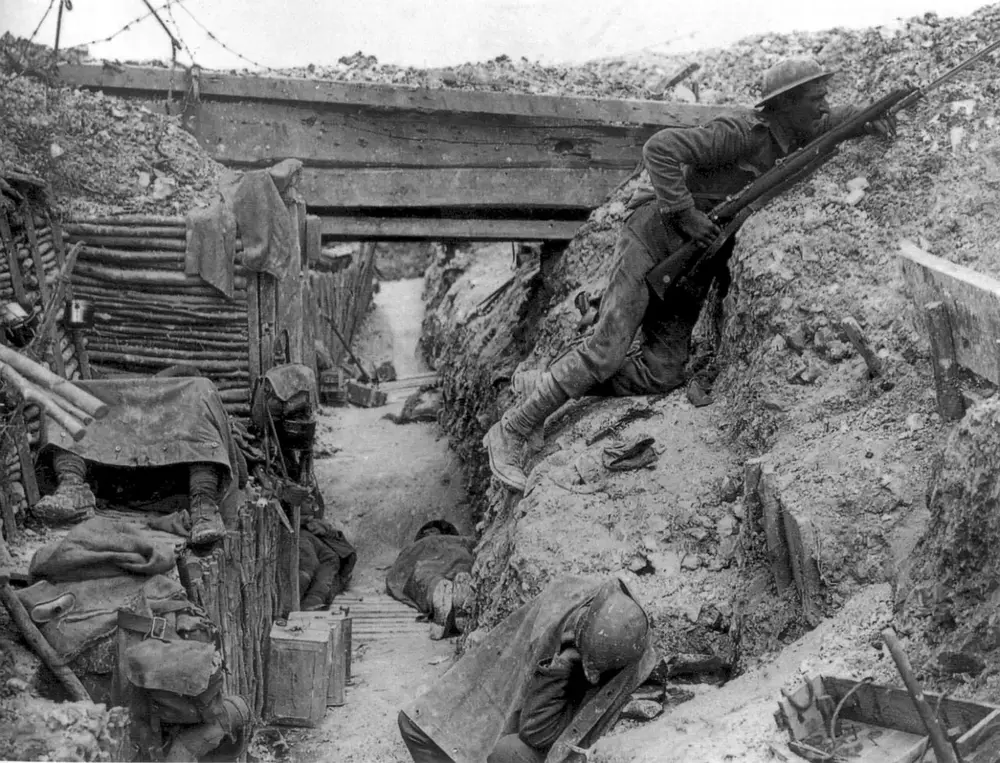
- 第一次世界大戰 1914 年爆發,1918 年 11 月 11 日上午 11 點停戰。The First World War began in 1914 and ended at 11am on 11 November 1918.
- 1916 年索姆河戰役首日,英軍傷亡約 6 萬人。On the first day of the Battle of the Somme (1916) the British suffered about 60,000 casualties.
- 女性爭取投票權:埃米琳·潘克赫斯特領導"婦女參政運動";1918 年 30 歲以上女性獲投票權,1928 年女性與男性在 21 歲獲得同等投票權。Women won the vote after the suffragette campaign led by Emmeline Pankhurst: women over 30 in 1918, and at 21, the same age as men, in 1928.
- 1922 年愛爾蘭南部獨立(後為愛爾蘭共和國),北愛爾蘭留在英國。In 1922 the south of Ireland became independent (later the Republic of Ireland), while Northern Ireland stayed in the UK.
- 第二次世界大戰:英國於 1939 年 9 月 3 日對德宣戰;温斯頓·丘吉爾 1940 年任首相。In the Second World War Britain declared war on Germany on 3 September 1939. Winston Churchill became Prime Minister in 1940.
- 1940 年敦刻爾克大撤退救出 30 多萬士兵;同年不列顛之戰中皇家空軍擊退德國空軍;德國隨後對英國城市實施"閃電戰"轟炸。The Dunkirk evacuation (1940) rescued over 300,000 soldiers. That summer the RAF won the Battle of Britain against the German air force, which then bombed British cities in the Blitz.
- 1944 年 6 月 6 日諾曼底登陸(D-Day);1945 年 5 月 8 日歐洲戰事結束;日本在原子彈襲擊後於 1945 年 8 月投降。Allied forces landed in Normandy on D-Day, 6 June 1944; the war in Europe ended on 8 May 1945, and Japan surrendered in August 1945 after atomic bombs were dropped.
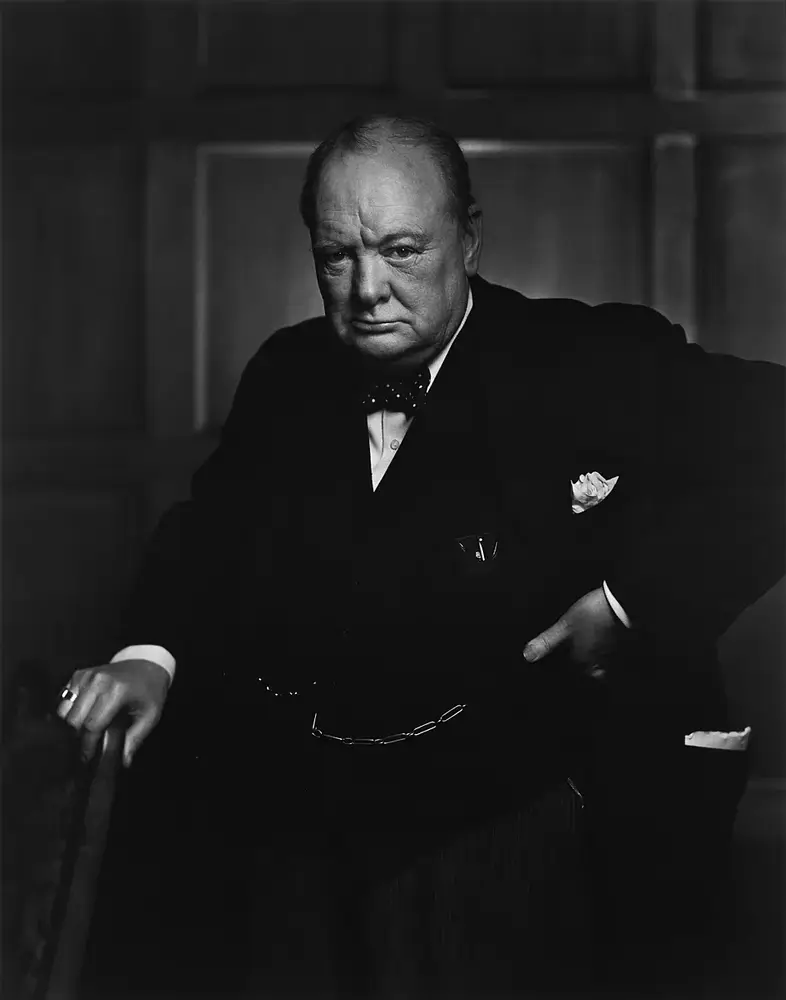
丘吉爾的名言之一是 1940 年在下議院説的 "We shall fight on the beaches"(我們將在海灘上戰鬥)。他 1945 年大選失利,1951 年再次出任首相。2002 年,他在 BBC 的評選中被選為"最偉大的英國人"。
One of Churchill's best-known speeches was "We shall fight on the beaches", in the House of Commons in 1940. He lost the 1945 election but became Prime Minister again in 1951, and in 2002 he was voted the greatest Briton of all time in a BBC poll.
亞歷山大·弗萊明 1928 年發現青黴素,戰時開始大規模生產,挽救了無數生命。
Alexander Fleming discovered penicillin in 1928; it was mass-produced during the war and saved countless lives.
戰後英國至今 ⭐
Britain since 1945
- 1945 年,克萊門特·艾德禮領導的工黨政府建立福利國家。In 1945 Clement Attlee's Labour government created the welfare state.
- 1948 年,衞生大臣安奈林·貝文主持成立國民醫療服務體系(NHS),看病免費。In 1948 Health Minister Aneurin (Nye) Bevan led the founding of the National Health Service (NHS), with healthcare free at the point of use.
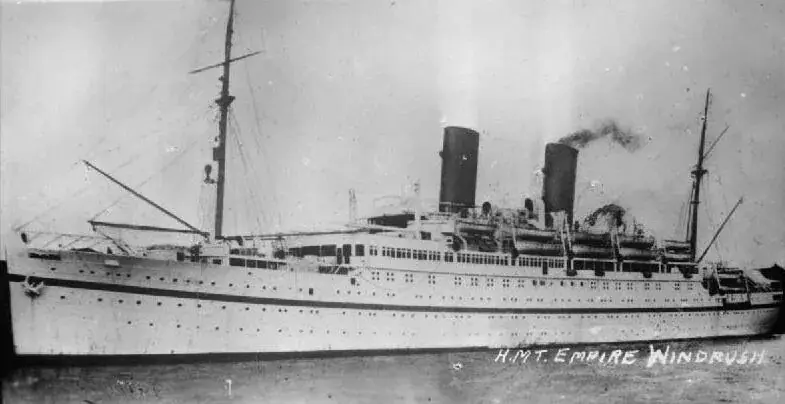
- 1948 年"帝國疾風號"載着來自加勒比的移民抵達,幫助戰後重建。In 1948 the Empire Windrush brought people from the Caribbean to help rebuild post-war Britain.
- 1947 年印度、巴基斯坦獨立,帝國逐步轉變為英聯邦。India and Pakistan became independent in 1947, and the Empire gradually became the Commonwealth.
- 1973 年英國加入歐洲經濟共同體(EEC)。The UK joined the European Economic Community (EEC) in 1973.
- 瑪格麗特·撒切爾是英國第一位女首相(1979–1990)。Margaret Thatcher was the UK's first woman Prime Minister (1979–1990).
- 1998 年《耶穌受難日協議》為北愛爾蘭帶來和平;1999 年蘇格蘭議會和威爾士議會成立。The Good Friday Agreement (1998) brought peace to Northern Ireland; the Scottish Parliament and the Welsh Assembly were set up in 1999.
英國的發明與發現British inventions and discoveries
| English | 中文 | 説明 |
|---|---|---|
| John Logie Baird | 約翰·洛吉·貝爾德 | 1920 年代研製出電視。 |
| Robert Watson-Watt | 羅伯特·沃森-瓦特 | 提出雷達的應用,二戰中發揮關鍵作用。 |
| Frank Whittle | 弗蘭克·惠特爾 | 1930 年代發明噴氣發動機。 |
| Alan Turing | 艾倫·圖靈 | 提出"圖靈機"理論,為現代計算機奠基。 |
| Christopher Cockerell | 克里斯托弗·科克雷爾 | 發明氣墊船。 |
| Robert Edwards & Patrick Steptoe | 愛德華茲與斯特普託 | 開創試管嬰兒(IVF),1978 年首例誕生。 |
| James Goodfellow | 詹姆斯·古德費洛 | 1960 年代發明自動取款機(ATM)與 PIN 碼。 |
| Ian Wilmut & Keith Campbell | 威爾穆特與坎貝爾 | 1996 年克隆出多莉羊,第一隻克隆哺乳動物。 |
| Sir Peter Mansfield | 彼得·曼斯菲爾德 | 共同發明核磁共振成像(MRI)。 |
| Sir Tim Berners-Lee | 蒂姆·伯納斯-李 | 1990 年發明萬維網(World Wide Web)。 |
手冊出版之後的重要變化Changes since the handbook was published
- 2016全民公投決定脱離歐盟Referendum vote to leave the EU
- 20201 月 31 日英國正式脱離歐盟The UK left the EU on 31 January
- 20229 月 8 日伊麗莎白二世去世,查爾斯三世繼位Elizabeth II died on 8 September; Charles III became king
- 2026世襲貴族不再自動擁有上議院席位Hereditary peers no longer sit in the Lords by right
本章自測
Quick check
點選答案即可看到對錯和解析。想按真實考試節奏練習,請做整套模擬題。
Syllabus points are our own summary of the topics in the official handbook Life in the United Kingdom: A Guide for New Residents (3rd edition). They are not quotations from it. Facts that have changed since the handbook was published are marked.
考綱要點為本站根據官方手冊《Life in the United Kingdom: A Guide for New Residents》(第三版)考查範圍自行整理,並非手冊原文;手冊出版後已發生變化的事實已註明。最後核實:2026年10月。