民主的發展
The development of democracy
- 英國是議會民主制國家,同時是君主立憲制。The UK is a parliamentary democracy with a constitutional monarch.
- 19 世紀選舉權逐步擴大;1918 年 21 歲以上男性和 30 歲以上女性獲得投票權,1928 年男女同為 21 歲,1969 年投票年齡降至 18 歲。The vote was gradually widened in the 19th century. In 1918 men over 21 and women over 30 could vote; in 1928 women gained the vote at 21 like men; in 1969 the voting age fell to 18.
- 1872 年引入無記名投票,選民可以秘密投票。The secret ballot was introduced in 1872.
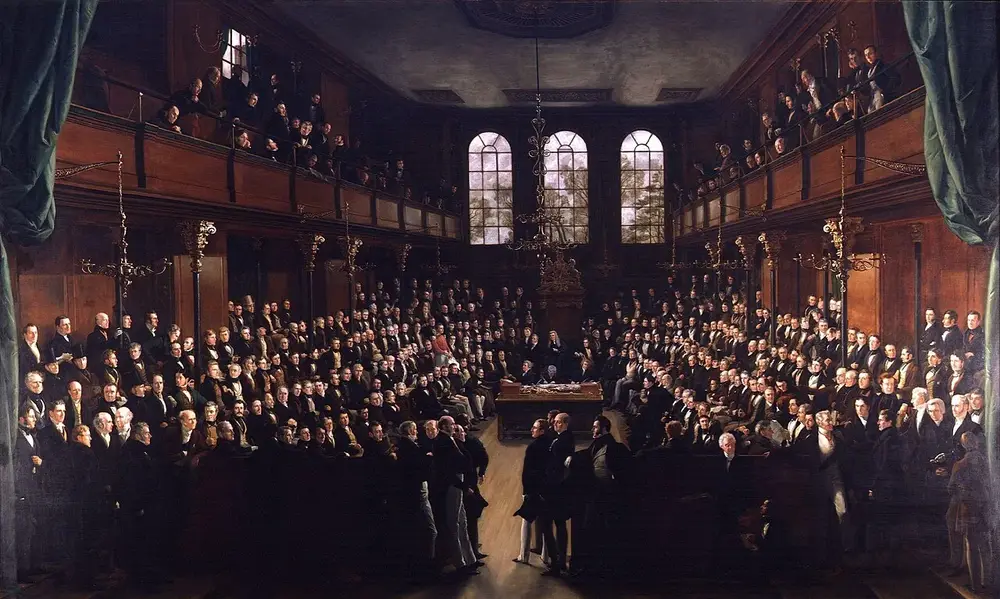
英國沒有成文憲法:憲法由議會法律、慣例和法院判例共同構成,可以隨時代演進。核心機構包括君主、議會(兩院)、首相與內閣、司法機構、警察、公務員體系和地方政府,以及蘇格蘭、威爾士、北愛爾蘭的權力下放政府。
The UK has no written constitution in a single document. It is made up of Acts of Parliament, conventions and court decisions, and can change over time. Its institutions include the monarchy, Parliament (two Houses), the Prime Minister and Cabinet, the judiciary, the police, the civil service, local government and the devolved governments of Scotland, Wales and Northern Ireland.
君主立憲制 ⭐
The constitutional monarchy
- 現任君主是國王查爾斯三世,2022 年繼位;王位繼承人是威廉王子。The current monarch is King Charles III, who became King in 2022; the heir is Prince William.
- 君主是國家元首,但不制定法律,按照民選政府的建議行事,保持政治中立。The monarch is head of state but does not make laws; he acts on the advice of the elected government and stays politically neutral.
- 君主的職責包括:每年在議會開幕大典上宣讀國王演講(列出政府計劃)、每週會見首相、任命首相、對法案給予御準。The monarch's role includes reading the King's Speech at the State Opening of Parliament (setting out the government's plans), meeting the Prime Minister weekly, appointing the Prime Minister and giving Royal Assent to laws.
- 君主同時是英聯邦元首,也是英格蘭教會的最高領袖。國歌為《天佑國王》(God Save the King)。The monarch is also Head of the Commonwealth and Supreme Governor of the Church of England. The national anthem is "God Save the King".
手冊出版時的君主是伊麗莎白二世(1952–2022 年在位,在位時間最長的英國君主)。2022 年 9 月 8 日她去世後,查爾斯三世即位,2023 年 5 月 6 日在威斯敏斯特教堂加冕。
When the handbook was published the monarch was Elizabeth II, who reigned from 1952 to 2022, longer than any other British monarch. After she died on 8 September 2022, Charles III became King and was crowned at Westminster Abbey on 6 May 2023.
議會兩院 ⭐
The Houses of Parliament
- 議會由下議院和上議院組成,設在倫敦威斯敏斯特宮。Parliament has two Houses, the House of Commons and the House of Lords, at the Palace of Westminster in London.
- 下議院有 650 名議員(MP),各代表一個選區,由選民選出;下議院是更重要的一院。The House of Commons has 650 MPs, each representing a constituency and elected by voters. It is the more important chamber.
- 議長(Speaker)由議員選出,主持辯論,必須保持政治中立。The Speaker, chosen by MPs, chairs debates and must stay politically neutral.
- 上議院議員不經選舉:主要是由君主根據首相建議任命的終身貴族,以及英格蘭教會的 26 位主教。Members of the House of Lords are not elected. Most are life peers appointed by the monarch on the Prime Minister's advice, plus 26 Church of England bishops.
- 上議院審議法案、提出修改建議,但最終下議院可以否決上議院的意見。The Lords examine laws and suggest changes, but the Commons can overrule the Lords.
- 黨鞭(whips)負責確保本黨議員出席投票並按黨的立場投票。Whips make sure their party's MPs attend and vote as the party wants.
一項法案要成為法律,需在兩院分別經過多輪辯論(讀會),最後獲得君主御準。議會辯論全程記錄在 Hansard 中,公眾可以旁聽辯論,也可以在線觀看。
A bill becomes law after debates (readings) in both Houses and then Royal Assent. Everything said in Parliament is recorded in Hansard, and the public can watch debates in person or online.
首相、內閣與反對黨 ⭐
Prime Minister, Cabinet and Opposition
- 首相通常是下議院多數黨的領袖,由君主任命;官邸是唐寧街 10 號,鄉間官邸是契克斯(Chequers)。The Prime Minister is normally the leader of the party with the most MPs, appointed by the monarch. The official home is 10 Downing Street; the country house is Chequers.
- 首相任命約 20 名高級部長組成內閣,每週開會。The Prime Minister appoints about 20 senior ministers to the Cabinet, which meets weekly.
- 財政大臣負責經濟;內政大臣負責犯罪、警務和移民;外交大臣負責對外關係。The Chancellor of the Exchequer is responsible for the economy, the Home Secretary for crime, policing and immigration, and the Foreign Secretary for relations with other countries.
- 第二大黨是反對黨,其領袖是反對黨領袖,組成"影子內閣"。The second-largest party forms the Opposition; its leader is the Leader of the Opposition, who leads a Shadow Cabinet.
- 首相問答(PMQs)在議會開會期間每週一次。Prime Minister's Questions takes place every week while Parliament is sitting.
- 公務員執行政府政策,必須保持政治中立。Civil servants carry out government policy and must be politically neutral.
英國傳統上是兩黨輪流執政:保守黨與工黨。其他政黨包括自由民主黨、蘇格蘭民族黨(SNP)、威爾士黨(Plaid Cymru)等。2010–2015 年曾出現保守黨與自由民主黨的聯合政府。
Power has traditionally alternated between the Conservative and Labour parties. Other parties include the Liberal Democrats, the Scottish National Party (SNP) and Plaid Cymru; from 2010 to 2015 the Conservatives and Liberal Democrats governed in coalition.
選舉與投票 ⭐
Elections and voting
- 議會大選至少每 5 年舉行一次,採用簡單多數制(first past the post):每個選區得票最多的候選人當選。General elections are held at least every five years, using first past the post: the candidate with the most votes in each constituency wins.
- 議員去世或辭職時,該選區舉行補選(by-election)。If an MP dies or resigns, a by-election is held in that constituency.
- 大選投票年齡為 18 歲;蘇格蘭議會、威爾士議會及當地地方選舉為 16 歲。The voting age for general elections is 18. For Scottish Parliament, Senedd and local elections in Scotland and Wales it is 16.
- 可在大選投票的人:年滿 18 歲的英國公民,以及居住在英國的愛爾蘭公民和符合條件的英聯邦公民。You can vote in general elections if you are 18 or over and a UK citizen, or an Irish or qualifying Commonwealth citizen living in the UK.
- 投票前必須登記在選民名冊(electoral register)上;投票站開放時間為早 7 點至晚 10 點,也可郵寄投票。You must be on the electoral register to vote. Polling stations are open from 7am to 10pm; you can also vote by post.
- 年滿 18 歲的英國、愛爾蘭或英聯邦公民大多可以參選議員。Most citizens of the UK, Ireland or the Commonwealth aged 18 or over can stand for election as an MP.
歐盟公民(愛爾蘭、馬耳他、塞浦路斯公民除外)不能在大選中投票,但符合條件的可以參加部分地方選舉。如今在英國大選和英格蘭地方選舉中投票,需出示帶照片的身份證件(2023 年起實施;北愛爾蘭更早就有此要求)。
EU citizens (apart from Irish, Maltese and Cypriot citizens) cannot vote in general elections, though some can vote in certain local elections. Voters now need photo ID at the polling station for UK general elections and local elections in England (introduced from 2023; Northern Ireland has required it for longer).
你可以聯繫你所在選區的議員:寫信、發郵件,或參加議員定期舉辦的"接待日"(surgery)。查找議員可以用議會官網 parliament.uk。
You can contact your local MP by letter or email, or go to one of their regular "surgeries". Find your MP on parliament.uk.
權力下放 ⭐
Devolved government
- 1997 年起,部分權力下放給蘇格蘭、威爾士和北愛爾蘭;1999 年蘇格蘭議會和威爾士議會成立。Since 1997 some powers have been devolved to Scotland, Wales and Northern Ireland; the Scottish Parliament and Welsh Assembly were set up in 1999.
- 蘇格蘭議會在愛丁堡的荷里路德,共 129 名議員(MSP),可就外交、國防等"保留事項"以外的大多數事務立法。The Scottish Parliament sits at Holyrood in Edinburgh and has 129 MSPs. It can make laws on most matters except "reserved" ones such as foreign affairs and defence.
- 威爾士議會(Senedd Cymru)在加的夫,負責教育、衞生、環境等事務。The Senedd (Welsh Parliament) sits in Cardiff and covers education, health, the environment and more.
- 北愛爾蘭議會設在斯托蒙特(Stormont),有 90 名議員(MLA),實行分權共治;議會曾多次暫停運作。The Northern Ireland Assembly sits at Stormont with 90 MLAs and works on a power-sharing basis; it has been suspended several times.
- 外交、國防、税收主體、移民等由英國議會負責。Foreign policy, defence, most taxation and immigration remain with the UK Parliament.
| 議會 Body | 議員 Members | 選舉方式 Voting system | |
|---|---|---|---|
| 蘇格蘭 Scotland | 蘇格蘭議會 · 愛丁堡 Scottish Parliament · Edinburgh | 129 MSPs | 附加成員制(選區+名單) Additional member system |
| 威爾士 Wales | Senedd · 加的夫 Senedd · Cardiff | 96(2026 年起) 96 (from 2026) | 封閉式政黨名單比例代表制 Closed-list proportional representation |
| 北愛爾蘭 Northern Ireland | 北愛議會 · 斯托蒙特 NI Assembly · Stormont | 90 MLAs | 單記可讓渡投票制 Single transferable vote |
地方政府(郡、市、區議會)負責垃圾收集、圖書館、社會服務、規劃、部分教育事務等,資金來自中央撥款和市政税(council tax)。地方選舉通常在 5 月舉行。許多城市有市長;2012 年起英格蘭和威爾士各警區選舉產生警察與犯罪專員(PCC)。
Local authorities (county, city and district councils) run services such as rubbish collection, libraries, social care, planning and some education, funded by central government and council tax. Local elections are usually held in May. Many towns have a mayor, and since 2012 each police area in England and Wales has elected a Police and Crime Commissioner.
英國與國際組織
The UK and the wider world
- 英聯邦是主要由前英國殖民地組成的自願聯合體,君主是英聯邦元首。The Commonwealth is a voluntary association of countries, mostly former parts of the British Empire; the monarch is its head.
- 英國是聯合國安理會五個常任理事國之一。The UK is one of the five permanent members of the UN Security Council.
- 英國是 1949 年成立的北約(NATO)創始成員國。The UK is a founding member of NATO, set up in 1949.
- 歐洲委員會(Council of Europe)與歐盟不同,負責保護人權;《歐洲人權公約》由它制定。The Council of Europe is separate from the EU and protects human rights; it created the European Convention on Human Rights.
英聯邦目前有 56 個成員國,人口約佔世界三分之一。成員國共同承諾維護民主、人權和法治。
The Commonwealth has 56 member countries, home to about a third of the world's population. Members commit to democracy, human rights and the rule of law.
法律與法院 ⭐
Respecting the law and the courts
- 刑法處理危害社會的犯罪(如盜竊、襲擊);民法處理個人或機構之間的糾紛(如合同、房東租客、工作糾紛)。Criminal law deals with crimes against society, such as theft or assault; civil law settles disputes between people or organisations, such as contracts, housing or employment.
- 英格蘭、威爾士:輕罪在治安法院審理,由無薪的治安法官(magistrates / JP)裁決;嚴重案件在刑事法院審理,由法官和 12 人陪審團審判。In England and Wales, minor criminal cases go to a Magistrates' Court, decided by unpaid magistrates (JPs); serious cases go to the Crown Court, with a judge and a jury of 12.
- 蘇格蘭:輕罪在治安法官法院,嚴重案件在郡法院或高等刑事法院;陪審團為 15 人。In Scotland, minor cases go to a Justice of the Peace Court; serious ones to a Sheriff Court or the High Court. Juries have 15 people.
- 10–17 歲被告在青少年法院審理。小額民事索賠(英格蘭和威爾士 £10,000 以下)走小額索賠程序,無需律師。Defendants aged 10–17 go to a Youth Court. Small civil claims (under £10,000 in England and Wales) use the small claims procedure, without a lawyer.
- 最高法院是英國最終上訴法院(蘇格蘭刑事案件除外),2009 年成立。The Supreme Court is the final court of appeal in the UK (except for criminal cases in Scotland); it was set up in 2009.
- 法律援助:負擔不起律師費的人可申請政府資助;公民諮詢局(Citizens Advice)提供免費諮詢。Legal aid helps people who cannot afford a lawyer; Citizens Advice gives free advice.
- 皇家檢察署(CPS)決定是否在英格蘭和威爾士提起刑事指控。The Crown Prosecution Service decides whether to bring criminal charges in England and Wales.
| 英格蘭與威爾士 England & Wales | 蘇格蘭 Scotland | |
|---|---|---|
| 輕微刑事案件 Minor criminal | 治安法院 Magistrates' Court | 治安法官法院 Justice of the Peace Court |
| 嚴重刑事案件 Serious criminal | 刑事法院(陪審團 12 人) Crown Court (jury of 12) | 郡法院 / 高等刑事法院(陪審團 15 人) Sheriff / High Court (jury of 15) |
| 民事糾紛 Civil disputes | 郡法院、高等法院 County Court, High Court | 郡法院、民事最高法院 Sheriff Court, Court of Session |
警察的職責是保護生命財產、維持秩序、預防和偵查犯罪。警務社區支援官(PCSO)協助巡邏。如果你認為警察行為不當,可以向警隊投訴,或向獨立警察行為辦公室(IOPC,英格蘭和威爾士)投訴。
The police protect life and property, keep the peace, and prevent and detect crime. Police Community Support Officers (PCSOs) support them on patrol. If you think the police have behaved badly you can complain to the force or, in England and Wales, to the Independent Office for Police Conduct (IOPC).
| English | 中文 | 説明 |
|---|---|---|
| Common law | 普通法 | 由法院判例逐步形成的法律,與議會制定的成文法並存。 |
| Statute law | 成文法 | 議會通過的法律(Acts of Parliament)。 |
| Habeas corpus | 人身保護 | 未經法庭審理不得被關押的權利。 |
| Jury | 陪審團 | 從選民名冊中隨機抽取的普通人,決定被告是否有罪。 |
基本權利與平等
Fundamental rights and equality
- 英國參與起草了《歐洲人權公約》;1998 年《人權法》將其納入英國法律。British lawyers helped draft the European Convention on Human Rights; the Human Rights Act 1998 brought it into UK law.
- 法律禁止基於性別、種族、宗教、殘疾、年齡、性取向等的歧視。The law forbids discrimination on grounds such as sex, race, religion, disability, age and sexual orientation.
- 家庭暴力在英國是嚴重犯罪,無論是否已婚;女性割禮和強迫婚姻均屬違法。Domestic violence is a serious crime, whether or not the couple are married. Female genital mutilation and forced marriage are illegal.
平等的保護體現在生活的方方面面:求職、租房、就醫、上學。覺得自己受到歧視,可以向平等與人權委員會(EHRC)或公民諮詢局求助。遭受家庭暴力,可撥打 999(緊急情況)或全國家暴求助熱線。
Equal treatment applies across daily life: jobs, housing, healthcare and education. If you think you have been discriminated against, the Equality and Human Rights Commission or Citizens Advice can help. If you experience domestic abuse, call 999 in an emergency or contact a national domestic abuse helpline.
你的角色:税收、駕駛與社區 ⭐
Your role in the community
- 所得税和國民保險(National Insurance)從工資中扣繳,用於資助公共服務和養老金;每人都需要一個國民保險號碼。Income tax and National Insurance are taken from your pay to fund public services and pensions; everyone needs a National Insurance number.
- 自僱人士需通過自我評估(self-assessment)自行報税。Self-employed people pay tax through self-assessment.
- 駕車需年滿 17 歲並持有駕照;車輛須上保險、交車輛税,3 年以上的車每年需通過 MOT 檢測。You must be at least 17 and hold a licence to drive. Cars must be insured and taxed, and those over three years old need an annual MOT test.
- 陪審團義務:選民名冊上的人可能被隨機抽中擔任陪審員,除特殊情況外必須履行。Jury service: anyone on the electoral register may be chosen at random and must serve unless they have a good reason.
- 參與社區的方式:做志願者、擔任學校理事、成為治安法官、加入政黨、獻血或登記器官捐獻、垃圾回收。Ways to help your community: volunteering, becoming a school governor, serving as a magistrate, joining a political party, giving blood or registering as an organ donor, and recycling.
陪審員年齡:英格蘭和威爾士為 18–75 歲(2016 年起;手冊寫的是 70 歲),蘇格蘭為 18 歲以上。在英格蘭,器官捐獻已改為"默認同意"制度(2020 年起),不想捐獻需主動登記。
Jurors must be 18 to 75 in England and Wales (since 2016; the handbook says 70) and 18 or over in Scotland. In England, organ donation became an opt-out system in 2020, so you need to register if you do not want to donate.
本章自測
Quick check
點選答案即可看到對錯和解析。想按真實考試節奏練習,請做整套模擬題。
Syllabus points are our own summary of the topics in the official handbook Life in the United Kingdom: A Guide for New Residents (3rd edition). They are not quotations from it. Facts that have changed since the handbook was published are marked.
考綱要點為本站根據官方手冊《Life in the United Kingdom: A Guide for New Residents》(第三版)考查範圍自行整理,並非手冊原文;手冊出版後已發生變化的事實已註明。最後核實:2026年10月。